Spotlight
Advanced High-Power Cooling Module Liquid-Cooling Performance, Lower Cost Than Air Cooling
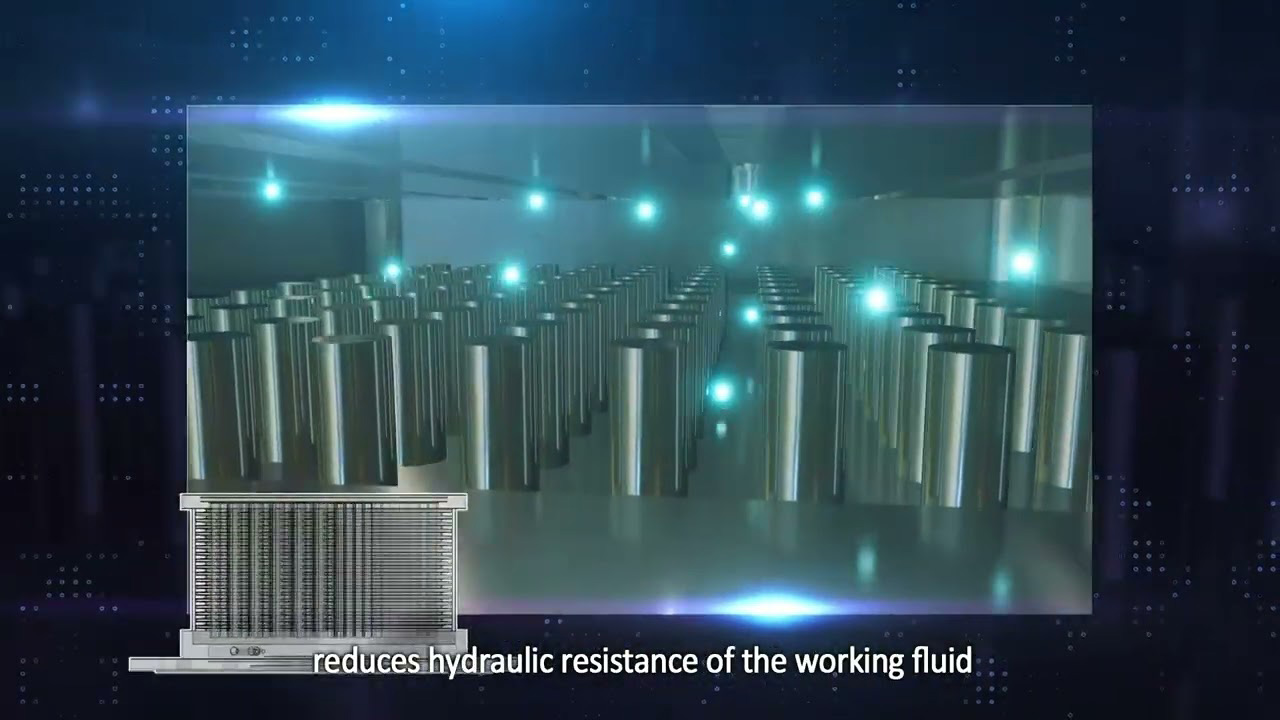
Watch video of the Advanced High-Power Cooling Module.
Artificial intelligence (AI) is transforming computing, but it is also creating an increasingly stubborn engineering problem: heat.
Today’s high-performance AI chips can exceed 1,000 watts of thermal design power (TDP), forcing data center engineers to rethink how heat is removed. Most servers still rely on air cooling, in which fans push air through metal heat sinks, but rising power densities make it harder for air alone to dissipate heat fast enough. Liquid cooling transfers heat far more efficiently because liquids carry heat much more effectively than air. However, it also requires plumbing and pumps to circulate coolant, more complex installation, and capital costs that can reach about five times those of air cooling — not to mention the operational risks of leaks.
Closing the Gap Between Air and Liquid Cooling
Researchers at ITRI set out to bridge this gap with a simple idea: build an air-cooling solution that delivers liquid-cooling performance. That effort led to the Advanced High-Power Cooling Module, an innovation that earned a silver award at the 2026 Edison Awards.
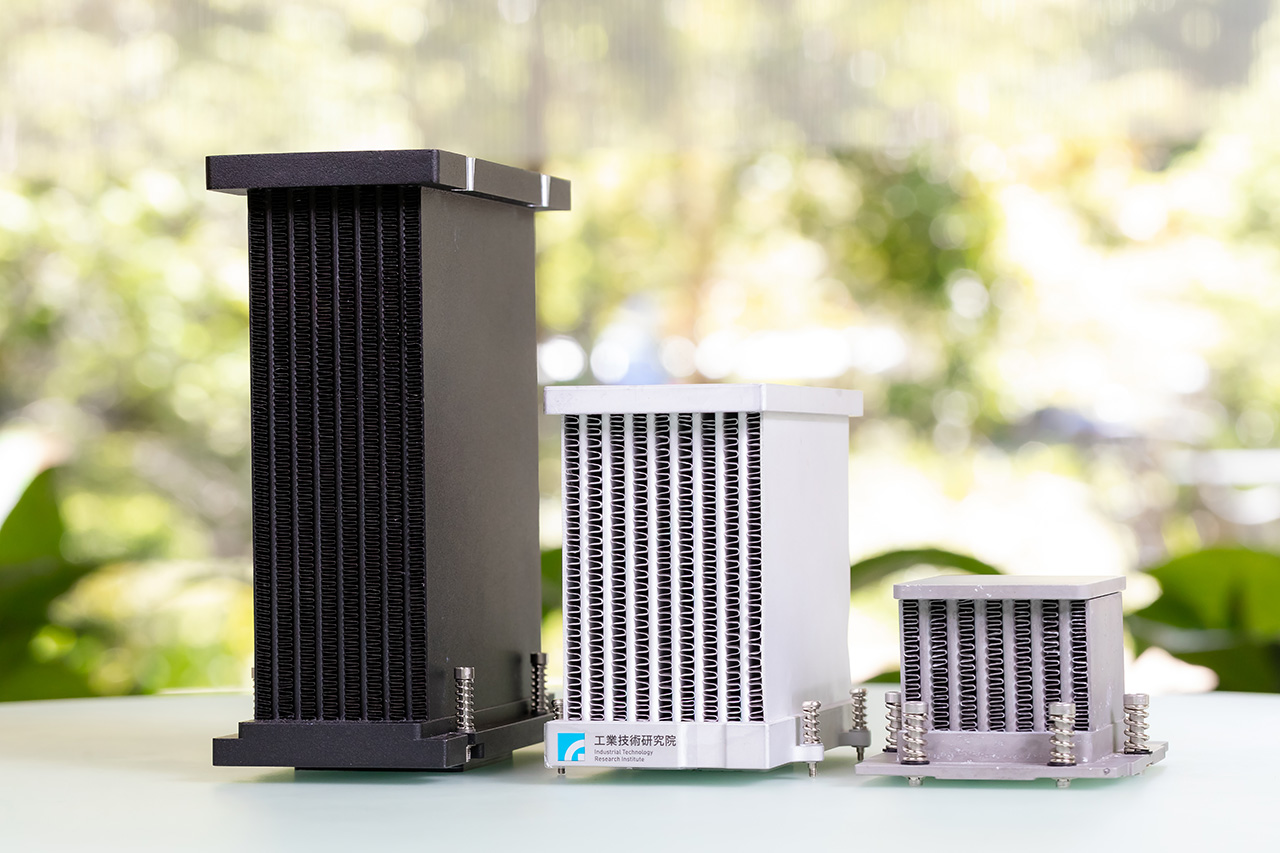
ITRI’s Advanced High-Power Cooling Module combines liquid-cooling performance with air-cooling simplicity.
A Passive Cooling Cycle Powered by Physics
“We designed microchannels to dramatically increase the evaporation surface area,” Zhang said. “But the real breakthrough lies in the cooling cycle itself. Instead of pumps or external power, the system relies on a physical mechanism called a passive thermosyphon cycle,” said Vance Zhang, R&D Manager at ITRI’s Green Energy and Environment Research Laboratories.
At first glance, the device resembles a compact radiator. Its structure consists of tightly stacked aluminum plates filled with serpentine microchannel layers, forming a dense vertical array that maximizes heat-transfer surface area. The repeating corrugated fin structures between the plates create thousands of microscopic pathways for heat exchange between air and refrigerant.

The two-man team, Vance Zhang and Shuan-Hseng Ting, was behind this Edison Award-winning innovation.
“We basically let physics do the work,” explained Shuan-Hseng Ting, Deputy Technical Manager at the same laboratory. “When heat from the chip enters the heat sink, the refrigerant inside the microchannels evaporates and naturally rises. As it cools and condenses, gravity returns it to the bottom of the structure, creating a continuous evaporation–condensation loop.”
This passive loop removes heat from the chip without mechanical components. Eliminating pumps and plumbing simplifies the design and reduces potential failure points—an important consideration for large-scale data centers where reliability is critical.
Cooling Power That Rivals Liquid Systems
Performance testing highlights the technology’s potential. In trials using NVIDIA B200 GPUs rated at 1,200 W TDP, the heat sink reduced chip temperatures from 84 °C to 72 °C while dissipating more than 1,500 watts of heat. Its measured thermal resistance of 0.035 °C/W surpasses most traditional air-cooling solutions and approaches the performance of liquid-cooling systems.
For operators, the practical advantage is equally important. Because the thermosyphon heat sink functions as a drop-in upgrade, data centers can enhance cooling capacity without redesigning server racks around liquid-cooling loops.
Lower Cost, Lower Carbon
Material choice also plays a crucial role in the system’s appeal. This device is constructed entirely from aluminum, which is lighter, more cost-effective, and easier to recycle than copper, a material commonly used in high-performance heat sinks. Improved heat dissipation can also reduce the energy required for cooling, helping lower operational costs and carbon emissions.
Redefining the Future of Air Cooling
While liquid cooling will remain necessary for the most extreme workloads, the researchers believe thermosyphon technology can significantly extend the practical limits of air cooling in infrastructure.
“Cooling is becoming one of the defining challenges of the AI era,” Zhang said. “If we can remove heat more efficiently without adding mechanical complexity, we can help data centers scale computing power more sustainably.”