R&D Focus
ITRI & EpiSonica Co-Develop 3D Breast Cancer Screening
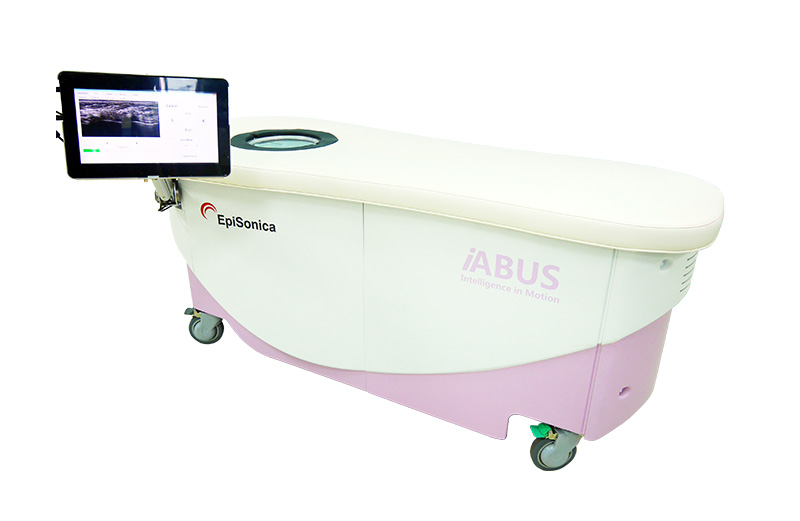
ITRI and EpiSonica co-developed the Automated Whole Breast Ultrasound Tomography Screening, iABUS.
According to World Health Organization (WHO) statistics, breast cancer is the most common cancer among women worldwide. Early detection, as a result, has become significant for the improvement of breast cancer outcome and survival. However, with over 70% of women in Asia born with dense breast tissue, the region’s detection rates by traditional X-ray scanning methods are less than 50%.
To address this phenomenon, ITRI in collaboration with EpiSonica Corporation combined the hardware mechanisms of traditional scanners with the software capabilities of three-dimensional (3D) ultrasound reconstruction imaging to develop the Automated Whole Breast Ultrasound Tomography Screening, iABUS. This system is capable of accurately scanning comprehensive images of breast structures within just one minute, making breast cancer screening simple and easy.
According to Senior Principal Engineer Guo-Zua Wu of ITRI’s Biomedical Technology and Device Research Laboratories, conventional breast cancer screening mechanisms using general ultrasonic probes take more than 20 minutes to conduct and require the retrieving of dozens of images for mammography interpretation. In comparison, the fast and easy-to-use iABUS can operate with existing ultrasound machines in hospitals. Patients can simply rest their upper bodies face down on the machine to allow the probes to gain full contact of the breasts’ weight. There is no need for painful compression, and radiation concerns are eliminated. In just a minute, the sensors can complete radial scans and automated imaging, and then create cross-section diagrams and images of the breast, helping physicians reach a diagnosis more efficiently.
Having years of experience working in fields related to breast ultrasounds, EpiSonica Corporation CFO Ellen Chang said that she understands the challenges that come with creating a standardized breast screening system as every breast is unique in size and shape. Nevertheless, traditional scanning systems are not only time-consuming, but highly dependent on the technician’s skills and insensitive to patient privacy. These shortcomings motivated EpiSonica to develop standardized screening equipment that is mindful of patient comfort.
Meanwhile, EpiSonica CEO Jimmy Chang pointed out that while breast cancer diagnosis may be challenging, the company is determined to build the best and most comprehensive solution. Chang has since 1992 been contemplating how to combine 3D image scanning with ultrasound technology to improve breast screening methods while also significantly reducing scanning time. “Ultimately,” said Chang, “we created a comfortable and friendly experience that offers quick and accurate breast scanning service to patients.”
A key figure behind the collaboration is EpiSonica CTO Ihyuan Kuo. He explained that he was impressed by ITRI’s medical imaging technology when he first learned about it in 2015. ITRI had accumulated years of knowledge in advanced ultrasound technology, with more recent investments in 3D imaging software, which were instrumental to creating better outcomes that could facilitate precise and accurate readings and detections. A perfect alliance was formed when EpiSonica’s specialization in hardware and ITRI’s expertise in software were combined.
Ellen Chang pointed out that EpiSonica has received orders for the system from countries such as Korea, Malaysia, and India, and plans to officially launch its initial public offering by 2018. This will mark the success of its goal to enter the international market.
ITRI, meanwhile, has been successful in such areas as dedicated chips for autonomous ultrasound, portable ultrasound equipment, and wearable ultrasonic devices. The Institute is continually developing the key technology and components for image-guided therapeutic ultrasound equipment. To reach the “last mile”, it plans to extend its expertise from diagnosis-based ultrasound equipment to wearable and therapeutic ultrasound products.