Feature
Bio-Inspired Ligament Scaffold
Watch video of the Bio-Inspired Ligament Scaffold.
For patients with a torn ligament, often the result of sports injuries or age-related degeneration, the road to recovery is rarely easy. In the US alone, more than 200,000 people undergo anterior cruciate ligament (ACL) reconstruction each year. However, current treatments continue to face challenges such as pain, lengthy rehabilitation, and the risk of graft failure or later arthritis.
To help overcome these limitations, ITRI developed the Bio-Inspired Ligament Scaffold (BILS), a bioengineered artificial ligament that accelerates healing in ligament repairs. This solution offers three key advantages:
- Enhanced Strength: The special woven structure, reinforced with bioceramics, strengthens the adhesion between the ligament and bone cells. With improved integration with the body’s tissue, BILS achieves a strength three times greater than traditional grafts.
- Upgraded Safety: Conventional artificial ligaments may release the heavy metal antimony when exposed to heat. BILS uses an antimony-free catalyst technology, eliminating long-term safety concerns after implantation.
- Faster Recovery: By combining the porous structure with collagen, the scaffold promotes better cell attachment and growth. Animal studies showed a 30% faster restoration of normal gait compared to existing PET-based grafts.
BILS is a cross-disciplinary innovation that combines expertise in biomedical engineering and textiles, joining the efforts of ITRI, Taiwan Textile Research Institute, Shinkong Synthetic Fibers, and OssAware Biotech. This collaboration has been upgrading traditional manufacturing by incorporating innovative medical materials and cutting-edge technologies.
Inspired by how shoelaces are made, the team refined the material formulation, fiber extrusion, weaving method, and structural design in a series of improvements. The final composite structure uses medical-grade PET fibers blended with nanoscale bioceramics and woven into a porous, collagen-coated form, showing superior biocompatibility, wear resistance, and mechanical strength.
BILS promotes bone ingrowth and cell adhesion while preventing complications such as joint inflammation. It will benefit patients worldwide by helping them experience less pain, return to daily activities more quickly, and avoid the need for re-surgery. This is particularly valuable for athletes and older adults.
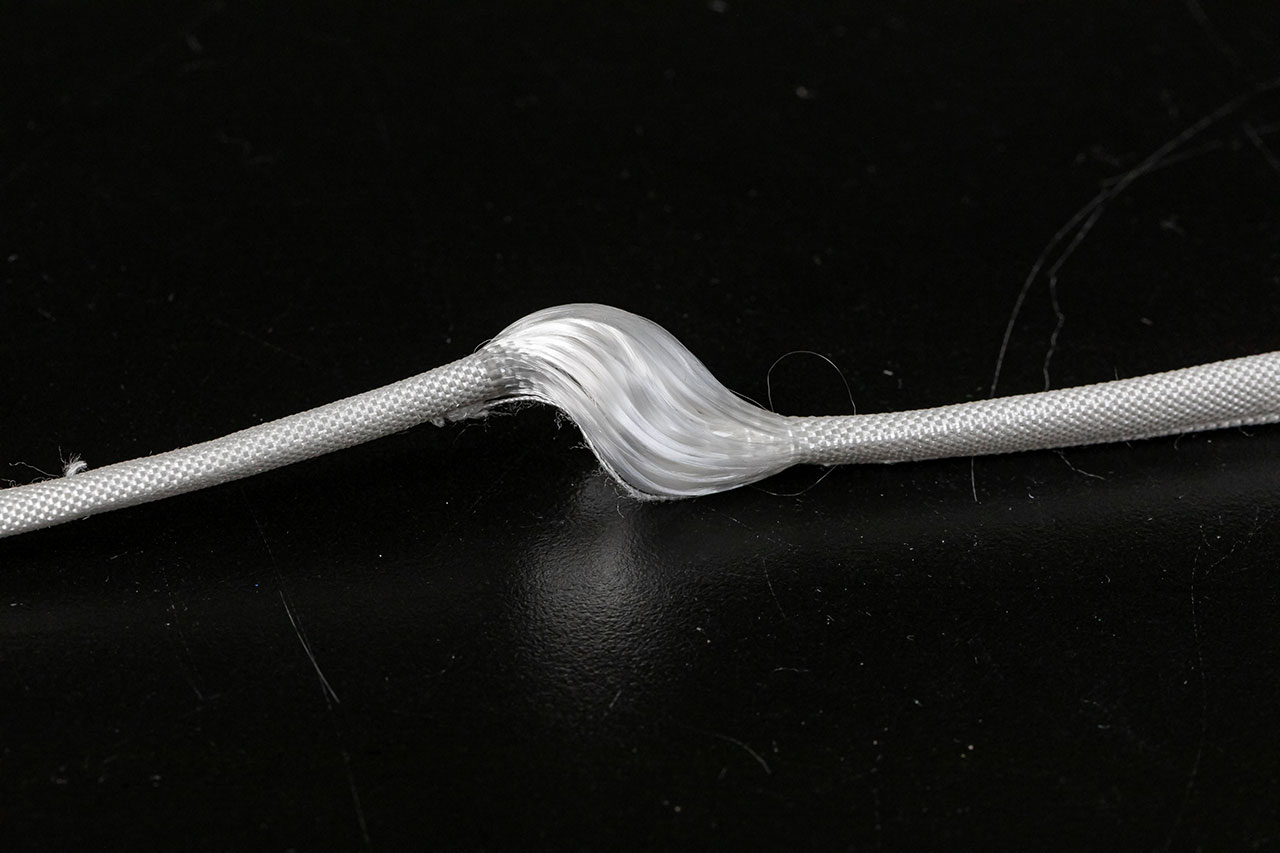
The textile-based bionic structure of BILS offers three times the strength of conventional grafts.
BILS has obtained the Quality Management Systems (QMS) certification for medical devices, with the Taiwan Food and Drug Administration (TFDA) submission underway. The technology has already been transferred to medical device manufacturers and textile companies, with patents secured in the US, EU, and Japan. Looking forward, BILS is poised to enter the global high-end medical device market, driving industrial upgrading and creating higher added value.