Spotlight
ITRI Drone Team Shines at 2025 World Robot Summit
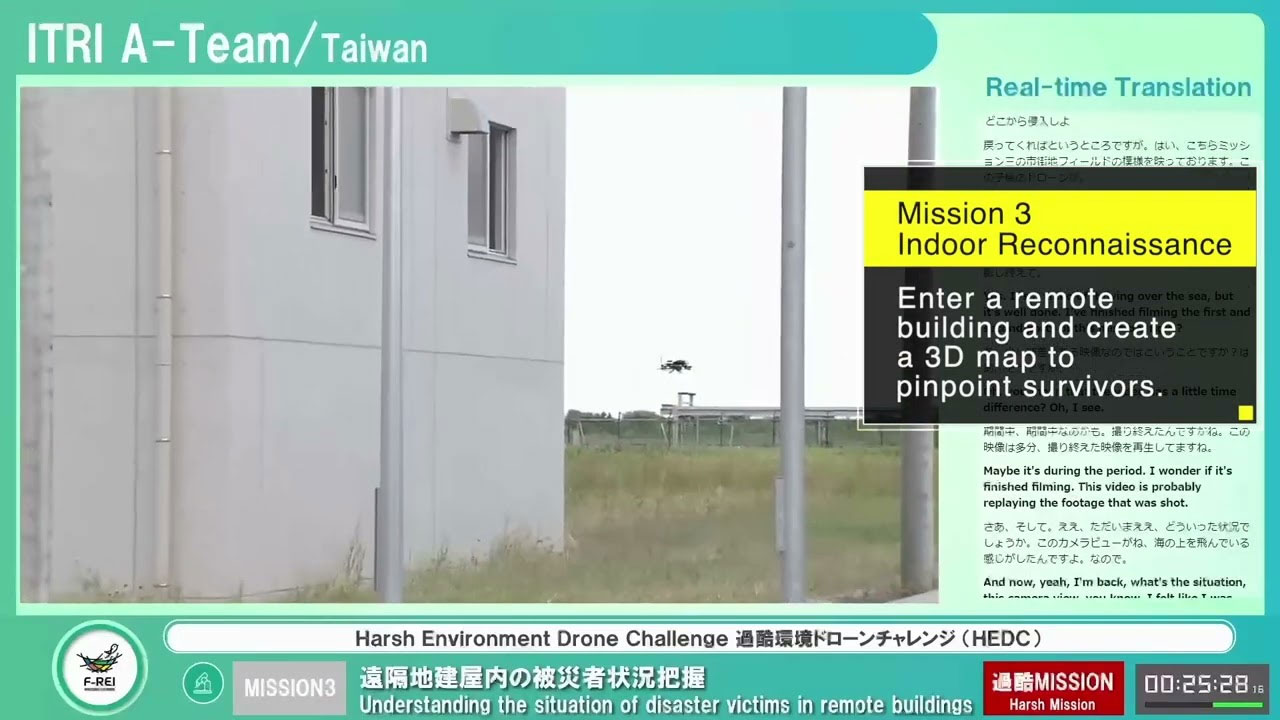
ITRI A-Team in action: from mission brief to victory at WRS 2025.
In the World Robot Summit’s Harsh Environment Drone Challenge (HEDC), which evaluates the performance of unmanned aerial vehicles (UAVs) in post-disaster rescue scenarios, ITRI won second place while also setting two new records in HEDC history upon its first participation.
ITRI’s drones completed three demanding missions within one hour, including a 13-kilometer offshore flight for disaster surveying and route mapping, the location of trapped victims and supply delivery, and indoor reconnaissance. Despite Japan’s strict telecommunications and flight regulations, the team overcame these constraints through efficient collaboration and timely on-site adjustments. The drones demonstrated the effectiveness of ITRI’s optimized electric propulsion, lightweight design, and sensor-fusion technologies, achieving both endurance and precision crucial to real-world rescue operations.
ITRI’s performance was marked by two firsts in HEDC history: reaching the farthest rescue point ever accomplished by UAVs; and deploying first-person view (FPV) drones into buildings for search missions. These breakthroughs highlighted the UAVs’ exceptional endurance and stability, as they overcame strong winds and limited communication bandwidth during offshore flights to precisely reach designated search and rescue targets. The small FPV drones—airlifted to the site by mother drones—further expanded the mission’s scope by navigating through narrow, debris-filled environments under low-latency communication. They entered and exited buildings three times with precision to perform detailed indoor reconnaissance and survivor identification, a feat never before achieved in the challenge.
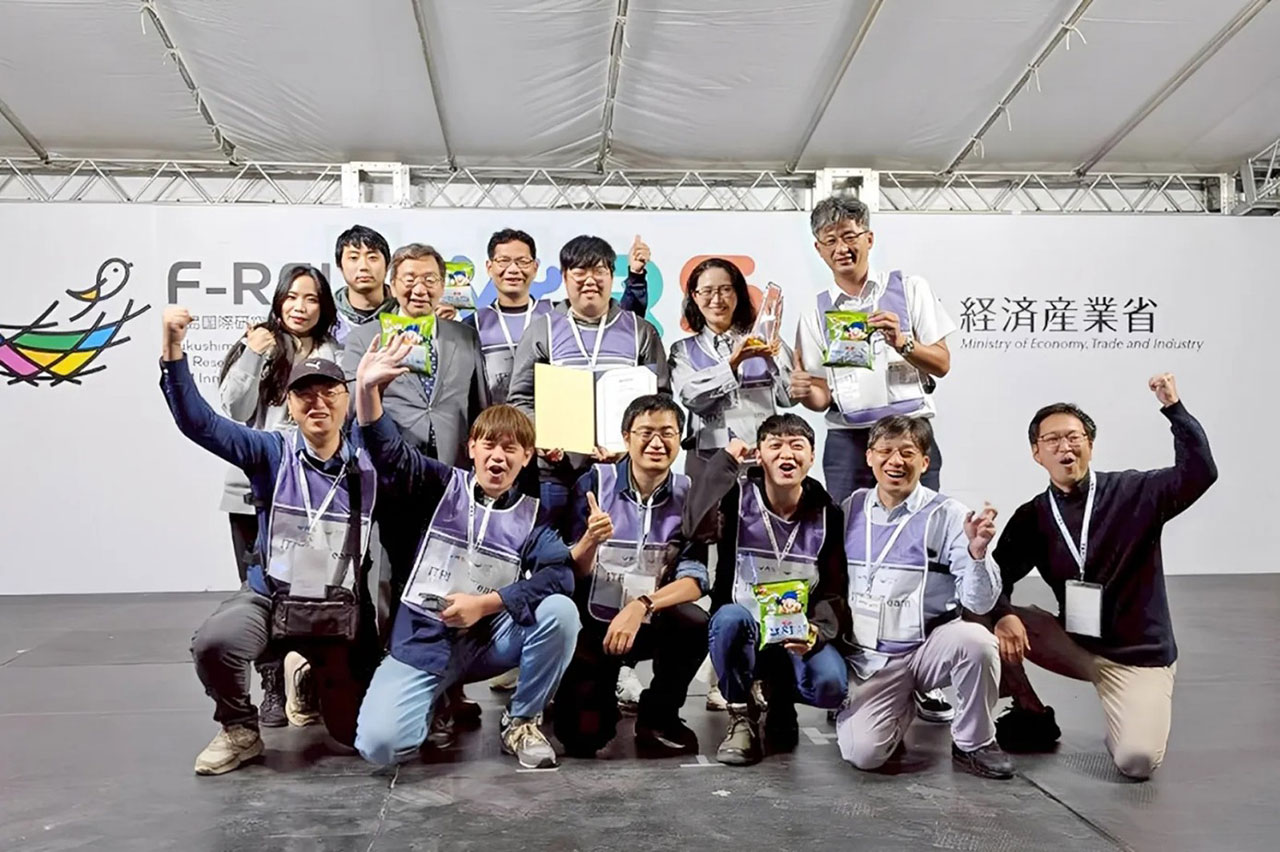
A proud moment shared by members of ITRI A-Team with Dr. Kenzo Nonami, Chair of the HEDC Competition Committee (back row, third from left).
This year’s event was held at Japan’s Fukushima Robot Test Field, simulating extreme conditions where roads and communications were disrupted after major disasters. The high level of difficulty and mission diversity pushed the limits of technological integration, flight autonomy, and adaptability for all participating UAV teams.
Looking ahead, ITRI plans to advance UAV resilience and responsiveness through innovations in relay communications, satellite connectivity, and lightweight AI modules that serve both public and industrial purposes.