R&D Story
Listening Smarter: How AI Helps Farmers Understand Their Cows
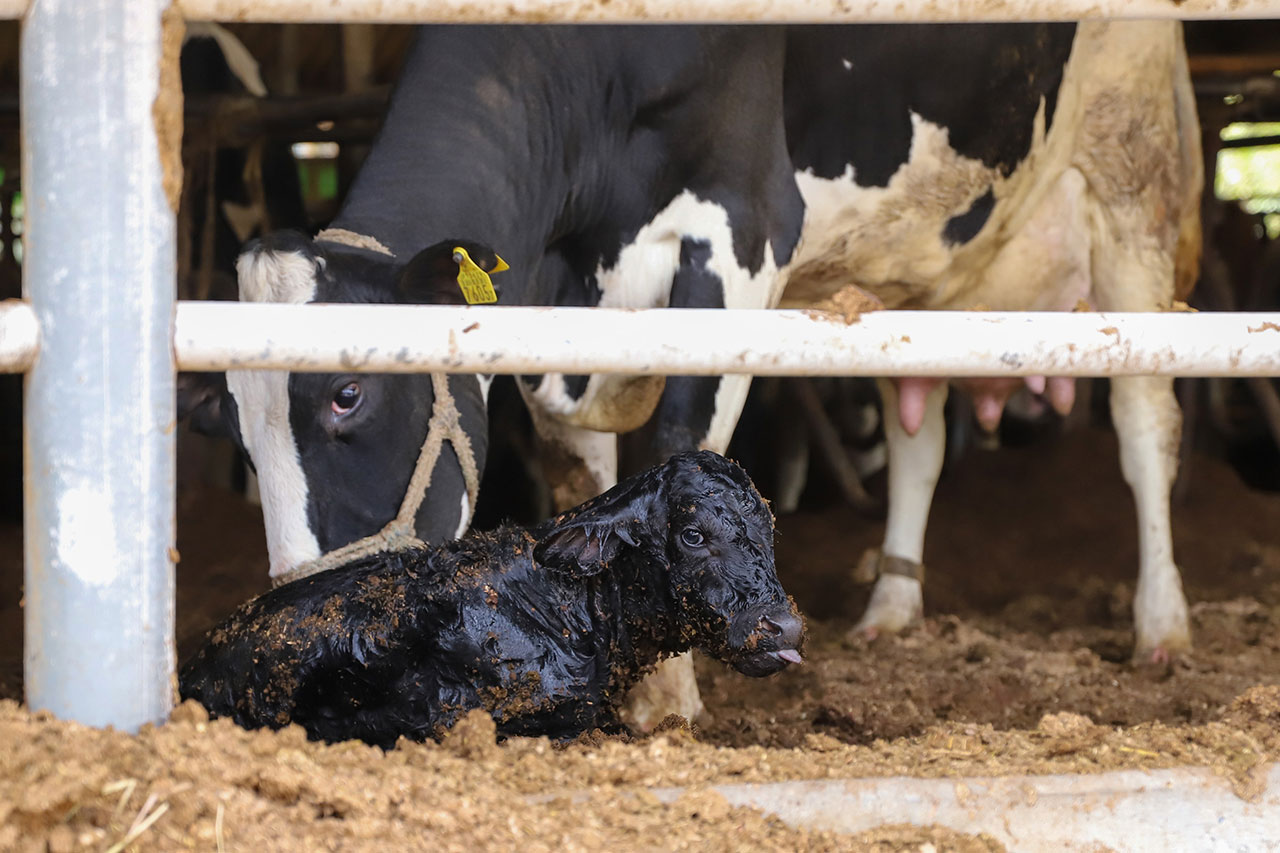
ITRI pioneers an AI voiceprint system that helps farmers detect cows’ emotions, health conditions, and calving readiness.
When it comes to dairy farming, early detection of stress, illness, or impending calving can make the difference between steady milk yield and costly loss. Traditionally, farmers rely on constant visual monitoring and experience to spot subtle changes in behavior—a task that demands round-the-clock attention, especially before and after calving. With shrinking rural workforces and rising labor shortages, however, such vigilance is becoming increasingly difficult to sustain.
To tackle this challenge, ITRI, in collaboration with the Taiwan Livestock Research Institute, has developed an AI-based husbandry system that interprets cows’ vocalizations to reveal signs of distress, disease, and calving. Powered by voiceprint recognition, this innovation acts as an “AI care assistant,” capable of discerning and alerting farmers to changes in each cow’s emotional and physiological state in real time.
Voices Turned into Insights
Yan-Jia Peng, Manager at ITRI’s Central Region Campus, explained that a cow’s first signals of physiological or emotional distress are often hidden in its vocalizations. “We realized that cows speak long before symptoms are visible. It’s just that humans can’t easily pick up those cues,” Peng said. To uncover these signals, the research team began extensive on-farm audio collection and synchronized behavioral observations across several Taiwanese dairies.
Turning cow vocalizations into data, however, proved far from straightforward. As the team built up their voiceprint database, they soon found that real barn recordings contain a lot of overlapping sounds—fans, milking machines, metal clanging, and multiple cows vocalizing at once—making it difficult to isolate meaningful vocal patterns.
The engineers addressed this on two fronts: hardware and signal processing. On the hardware side, they deployed a waterproof, dustproof, and corrosion-resistant piezo microphone module able to withstand high humidity and ammonia in the cowshed while keeping sensitivity to subtle vocal vibrations. On the processing side, raw audio signal is first amplified and then rid of unwanted high-frequency noise through a low-pass filter before being converted into digital form for denoising and feature extraction.
For feature extraction, the team uses Mel Frequency Cepstral Coefficients (MFCCs) to translate short-time segments of sound into spectrogram-like representations that emphasize perceptually relevant frequency components. Those features feed a convolutional neural network (CNN) that learns vibration details in the voiceprints, while a recurrent neural network (RNN) handles temporal dependencies so the system detects how a cow’s vocal signature evolves over time.
“These models help us capture the kinds of cues that are almost invisible in daily farm work,” said Chih-Jen Chen, Deputy Division Director at ITRI’s Smart Sensing & Systems Technology Center. “A cow’s discomfort or pre-calving state doesn’t manifest as a sudden, noticeable sound. It shows up as subtle shifts in tone and vocal vibration. The CNN picks out those minute details in each call, and the RNN looks at how they change over time and identifies trends. Together, they let us detect conditions that even an experienced farmer might miss.”
With these capabilities established, the technology was ready to be tested and deployed in real-world farm environments.
Smart Ranch Cloud: Monitoring Cows On-The-Go
After rigorous testing, ITRI’s cow voiceprint recognition system has demonstrated strong real-world performance. In field trials, its pre-calving detection accuracy exceeded 90% within three to six hours before labor, allowing farmers to take timely measures to ensure safer deliveries and reduce losses.
Building on this success, the technology’s scope is being extended to identify other health-related acoustic abnormalities, such as those associated with bloat and mastitis—two of the most common and serious conditions in dairy cattle.
The system is now integrated with a range of smart ranch modules, including feeding carts, manure-cleaning robots, and wearable smart collars, forming the Smart Ranch Cloud Platform, a multi-point sensing and real-time monitoring solution. Accessible via both app and web interfaces, this platform enables ranchers to remotely check on their cows even when away.
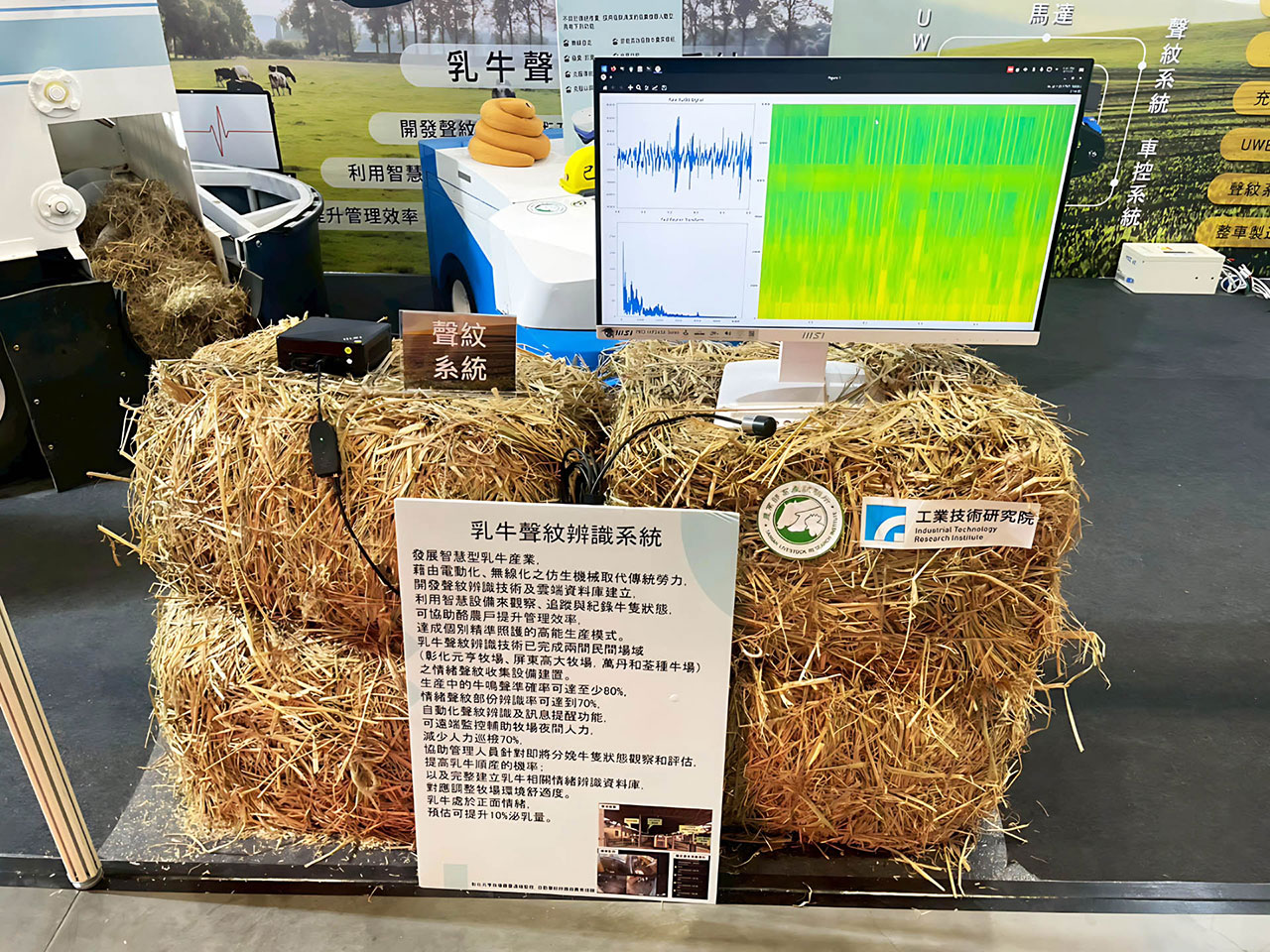
The Smart Ranch Cloud Platform allows ranch owners to remotely monitor herd conditions anytime, anywhere.
Further Development
While current trials show strong performance, the team continues to refine the system for greater accuracy and individuality recognition. The next step is to integrate beamforming technology to address the challenge of multiple cows vocalizing simultaneously. By using array microphones and directional algorithms, the system will be able to pinpoint which cow produced a specific sound.
Combined with RFID ear tags or AI imaging, this capability will create a detailed voiceprint log that records which cow said what, and when. Such precise tracking not only enhances the system’s analytical power but also enables farmers to build a long-term behavioral and health profile for each animal.
“We’re not teaching AI to be a farmer,” Peng said. “We’re giving farmers a way to understand their cows sooner—so they can act earlier, reduce losses, and care better.”
With this voice-based technology, Taiwan’s livestock industry is taking a gentle yet decisive step toward intelligent, humane, and sustainable farming.