Spotlight
Turbocharging the Next Generation of EVs with SiC
ITRI, together with its partners in Taiwan and Japan, showcased its latest silicon carbide (SiC) innovations at NEPCON JAPAN, one of Asia’s leading electronics manufacturing exhibitions. An emerging game changer for electric vehicles (EVs), SiC offers higher efficiency, greater voltage tolerance, superior thermal stability, and lighter system design than conventional silicon. The technology supports high-voltage platforms with faster switching and lower energy losses.
Integrating Power at the System Level
Leveraging these advantages, EV powertrain startup ZEPT developed the 3-in-1 e-Axle, a compact drive unit that combines the electric motor, motor controller, and gearbox. ITRI contributed its 1200V/450A SiC power modules to the system, enabling high-efficiency power conversion and high-voltage operation.
The SiC power modules, paired with advanced heat dissipation fin technology and optimized thermal design, support the system’s high power density while maintaining a compact footprint. Fully manufactured in Taiwan, the e-Axle has passed third-party power system testing. Prototype vehicles equipped with the system have also completed road testing.
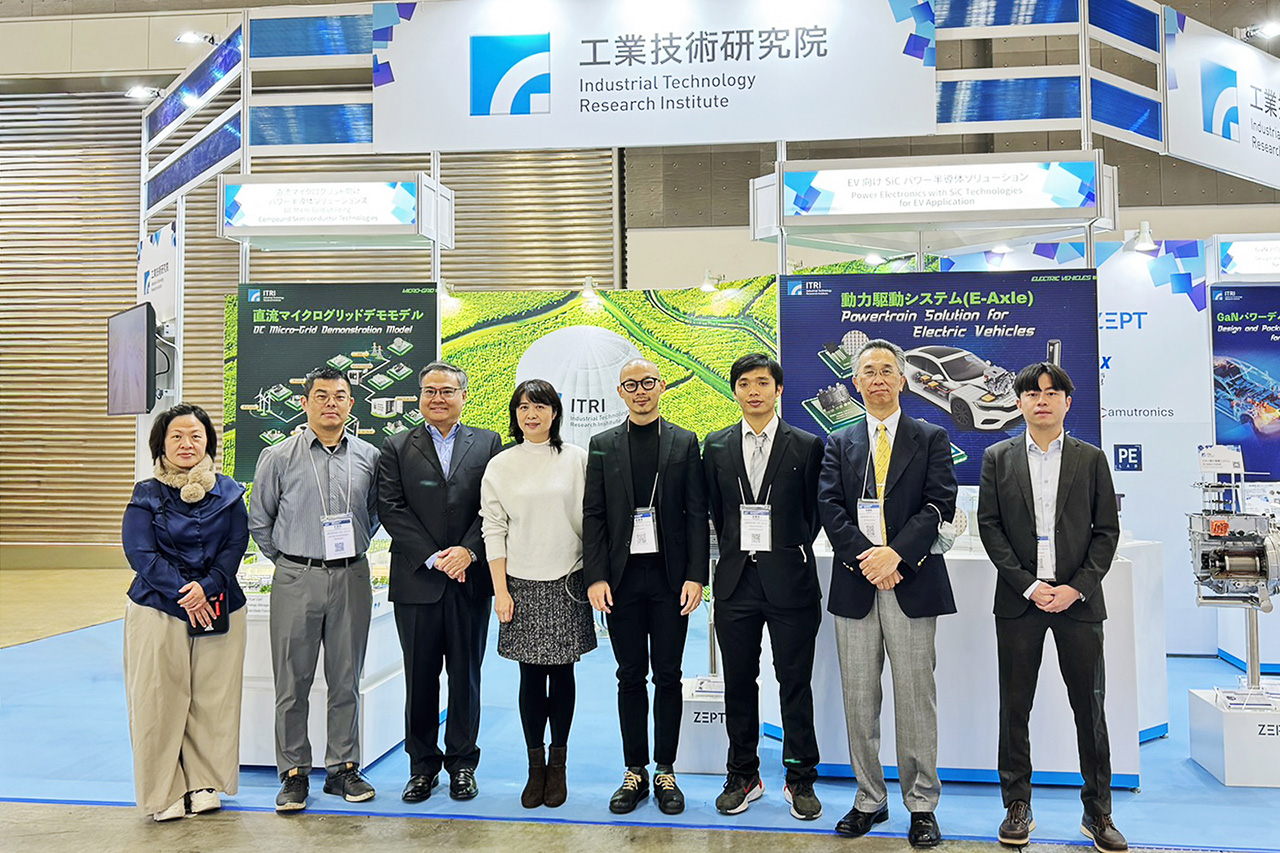
ITRI, Nagoya University, Super Energy Materials, and ZEPT representatives at NEPCON JAPAN
“Power semiconductors are becoming the foundation of next-generation industries, from electric mobility to AI infrastructure,” said Shih-Chieh Chang, ITRI’s Vice President and General Director of Electronic and Optoelectronic System Research Laboratories. “Our focus is to accelerate innovation from materials to systems, enabling our partners to compete in the global high-efficiency power era.”
ITRI’s work builds on long-term investment in compound power semiconductors. Its vehicle-grade SiC solutions have been introduced across supply chains in Taiwan, spanning component manufacturing, module packaging, and system integration. A dedicated power module reliability test lab further supports automotive electronics manufacturers with testing and verification services.
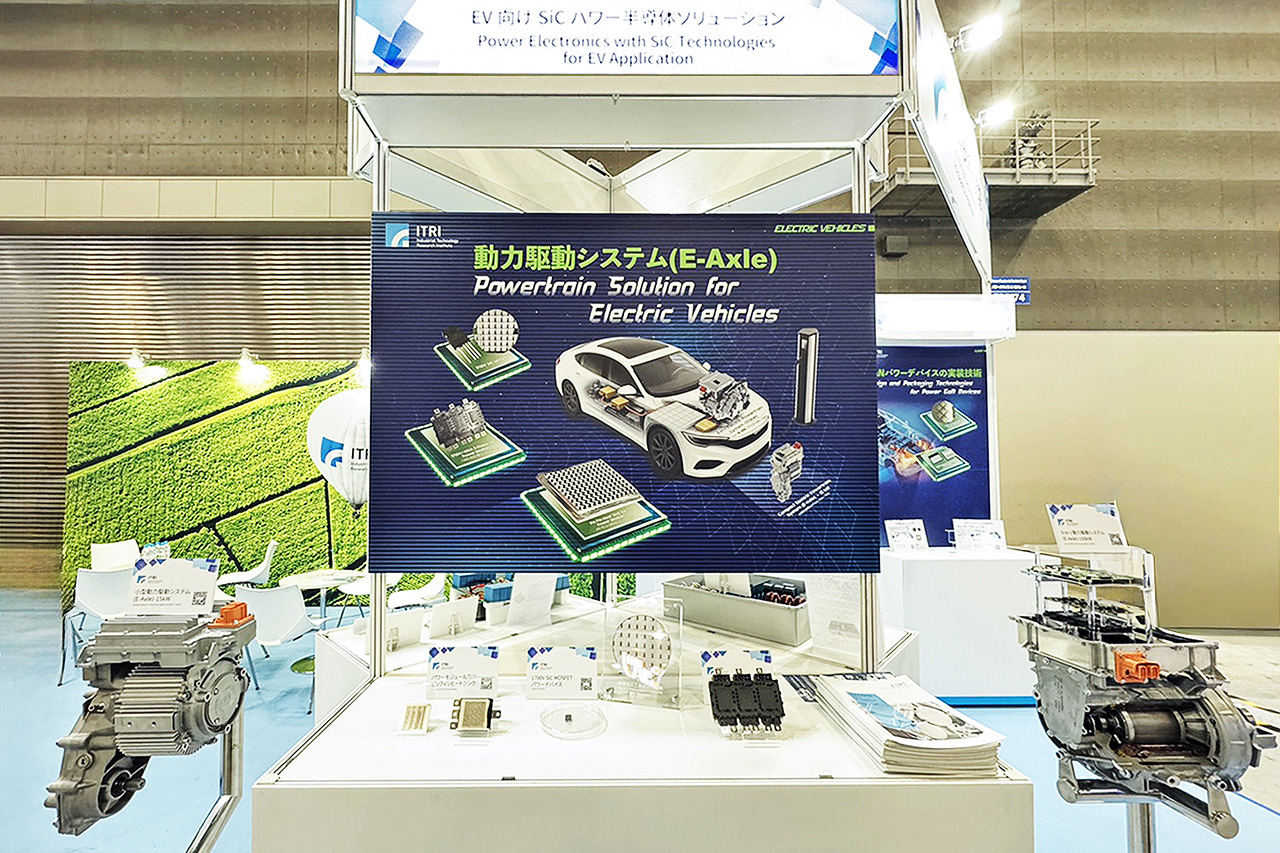
The 3-in-1 e-Axle highlights its vertically integrated SiC powertrain capabilities.
Expanding Across the EV and Energy Ecosystem
Beyond drive systems, ITRI is extending its wide-bandgap portfolio across EV and power infrastructure applications.
Super Energy Materials (SEMINC) has developed a silicon nitride ceramic substrate using active metal brazing technology. Designed for automotive power modules, ITRI and SEMINC jointly conducted rigorous validation to ensure its high reliability and heat resistance to meet growing demands for power density and long-term durability.
To support fast-charging networks, ITRI and Nagoya University jointly
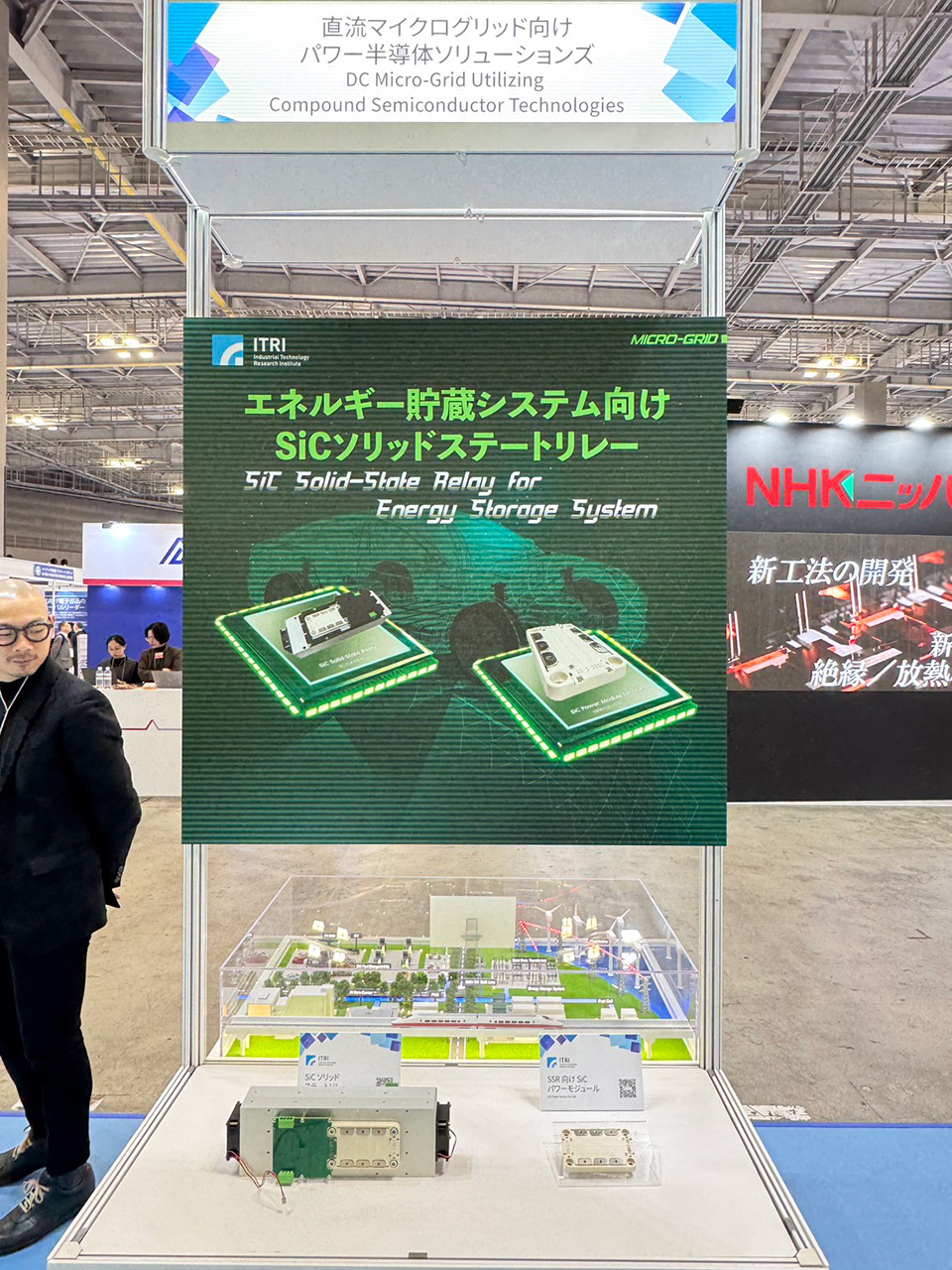
ITRI’s solid-state relay module enhances power conversion efficiency and reliability in energy infrastructure.
developed a 30 kW fast-charging station DC-DC converter, addressing the need for high-efficiency, high-power-density conversion in next-generation charging infrastructure.
ITRI also showcased energy-saving and storage technologies including solid-state relays, a critical conversion system for battery energy storage system, and integrated SiC power modules. Compared to traditional mechanical relays, these solutions improve power conversion efficiency, enhance system flexibility, and increase relay reliability.
As EVs, renewable energy, and AI infrastructure drive rising demand for efficient power conversion, these innovations reinforce ITRI’s capabilities in automotive and high-performance power semiconductors, supporting the global transition toward electrification and intelligent energy.