R&D Focus
Turning Every Ride Into Power Converting Elevator Motion into Electricity with Aluminum Batteries
Elevators move billions of people each day and collectively consume vast amounts of electricity. Yet within their routine motion lies an overlooked opportunity: for roughly half of their operating time, elevators are not consuming power but generating it—quietly turning buildings into vertical energy systems.
Rather than relying on brute lifting, elevators are actually counterweighted systems designed for balance like a seesaw. When a heavily loaded car descends or an empty car ascends, gravity does the heavy lifting, generating electricity.
The physics has long existed. The question was how to use it.
The Hidden Engineering Barrier
In practice, regenerative electricity from elevators is unstable. Voltage spikes can reach nearly 800 volts, and current direction shifts rapidly. Without proper control, this energy is routed to braking resistors and dissipated as heat. The obstacle is therefore not generation but control.
APh ePower, an ITRI spinoff, developed a high-efficiency DC-DC conversion architecture that stabilizes extreme voltage swings and steps them down for storage, with efficiencies reaching 90%.
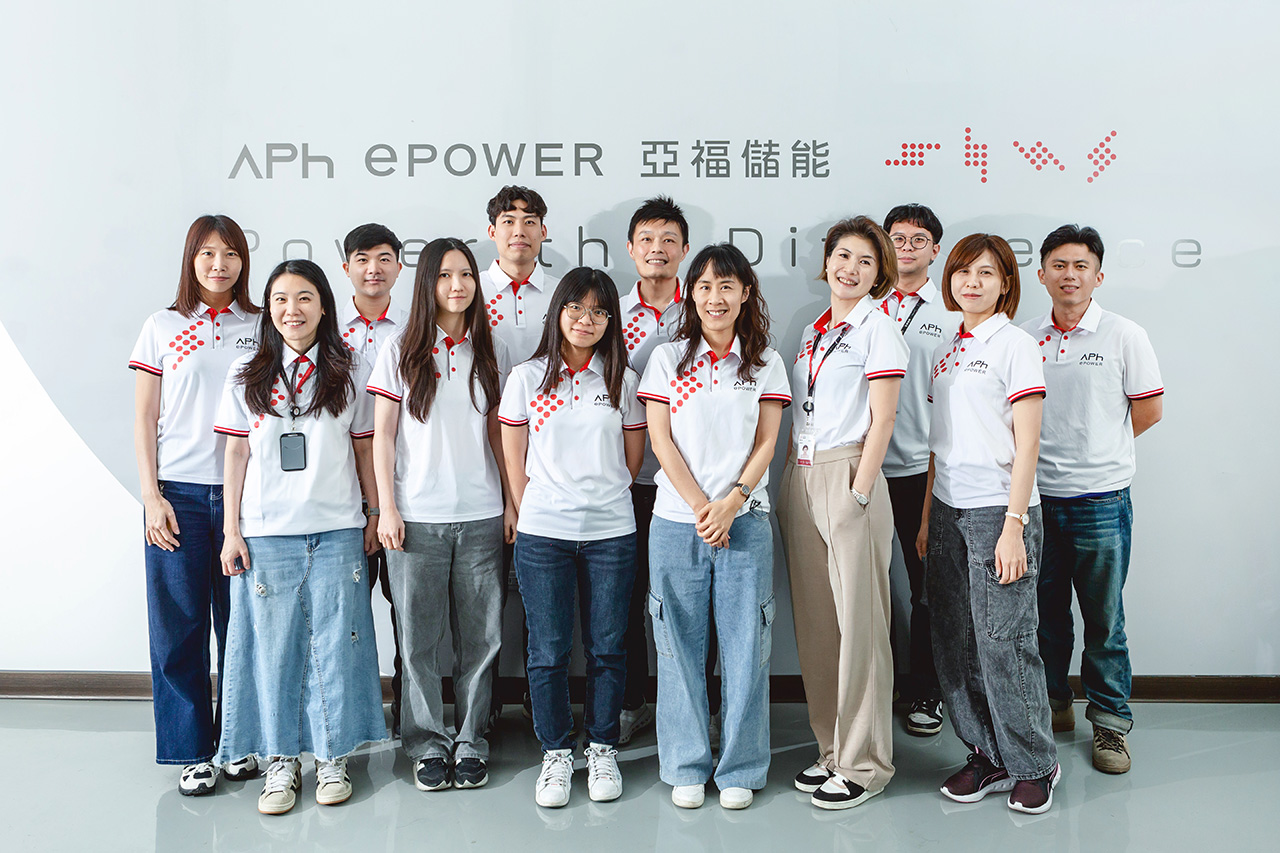
The APh ePower team stands together, led by Sean Su (center, back), advancing aluminum battery innovations.
“People assume you can just connect regenerative power to a battery,” says Sean Su, Director of APh ePower. “But elevator output fluctuates constantly. Our DC–DC system stabilizes that energy so it can be stored and reused reliably. This makes elevator energy recovery practical, and it earned us the 2025 R&D 100 Award.”
Matching Chemistry to Infrastructure
With voltage conversion stabilized, storage chemistry becomes the next critical layer.
The company’s platform builds on the earlier aluminum-based battery technology co-developed by ITRI and Stanford University. The research, first published in Nature, later received a 2017 Edison Award and was transferred to industry in 2019, leading to the formation of APh ePower.

APh ePower’s R&D and pilot facility in Kaohsiung will be operational by 2027, supporting the move to mass production.
Unlike lithium batteries, aluminum batteries with ionic liquid electrolytes are non-flammable and ideal for elevator energy regeneration. Under high-C rate conditions, they deliver ten times faster charge–discharge and over 100 times the cycle life, with higher safety, making them perfect for reliable energy recovery in confined spaces.
From Energy Recovery to Distributed Resilience
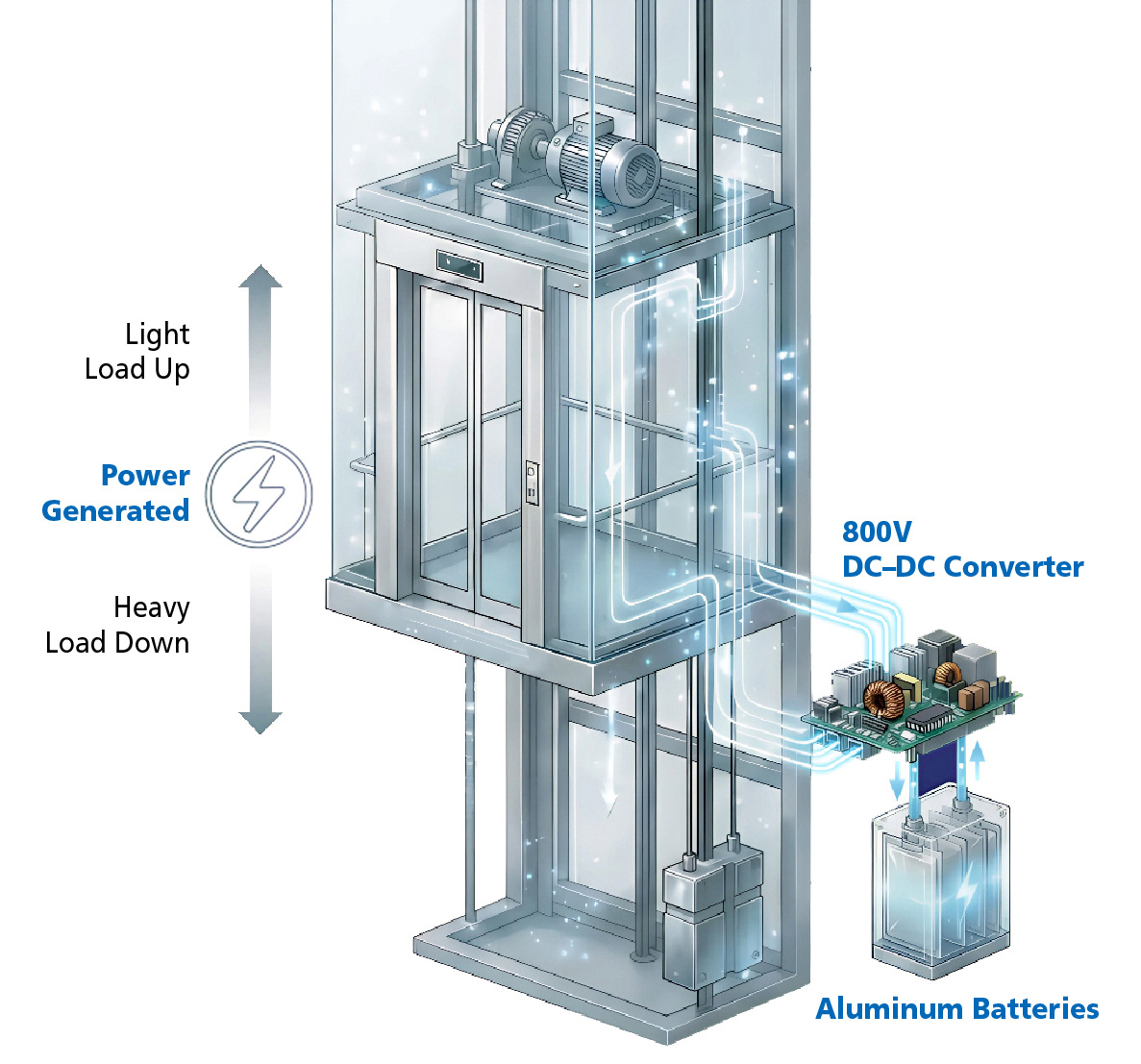
APh ePower’s regenerative elevator system turns motion into electricity when a heavily loaded car descends or a lightly loaded car rises.
Building on the power conversion interface and battery technology, APh ePower developed an integrated elevator system that converts recovered energy into usable electricity. Field deployments show electricity reductions exceeding 40%, demonstrating how vertical transport can become a distributed energy resource. The company is also exploring applications such as backup battery units for hyperscale data centers.
Together, these developments signal a broader shift: buildings and digital infrastructure are evolving from passive electricity consumers into active energy participants. As distributed energy becomes measurable, it increasingly shapes how efficiency is evaluated in modern infrastructure.
Reinterpreting Existing Infrastructure
Under a full global adoption scenario, the technology could unlock more than 160 terawatt-hours of annual electricity savings and cut nearly 80 million tons of CO₂ emissions. While theoretical, this estimate highlights the vast energy already generated—and largely wasted—within the world’s elevators.
This shift is also changing how infrastructure is valued. APh ePower’s elevator energy storage carbon-credit methodology, certified by Gold Standard, provides a framework to quantify emissions reductions and generate verified carbon credits based on measurable performance. In this context, elevator modernization extends beyond efficiency gains, positioning vertical transport as part of emerging climate and energy systems.
Reframed this way, elevators are no longer simply transport devices. They become distributed components of urban energy networks—reminding us that some of the most immediate climate opportunities may lie in rethinking the machines already moving around us.