R&D Focus
A Plastic Mulch Film Designed to Disappear
Plastic mulch films are widely used in modern agriculture for their ability to retain soil moisture, regulate temperature, prevent erosion, and suppress weeds. Yet after harvest, conventional polyethylene (PE) mulch films may persist in the environment for more than 200 years before decomposing. More commonly, they are incinerated after use, releasing carbon emissions and toxic pollutants into the environment.
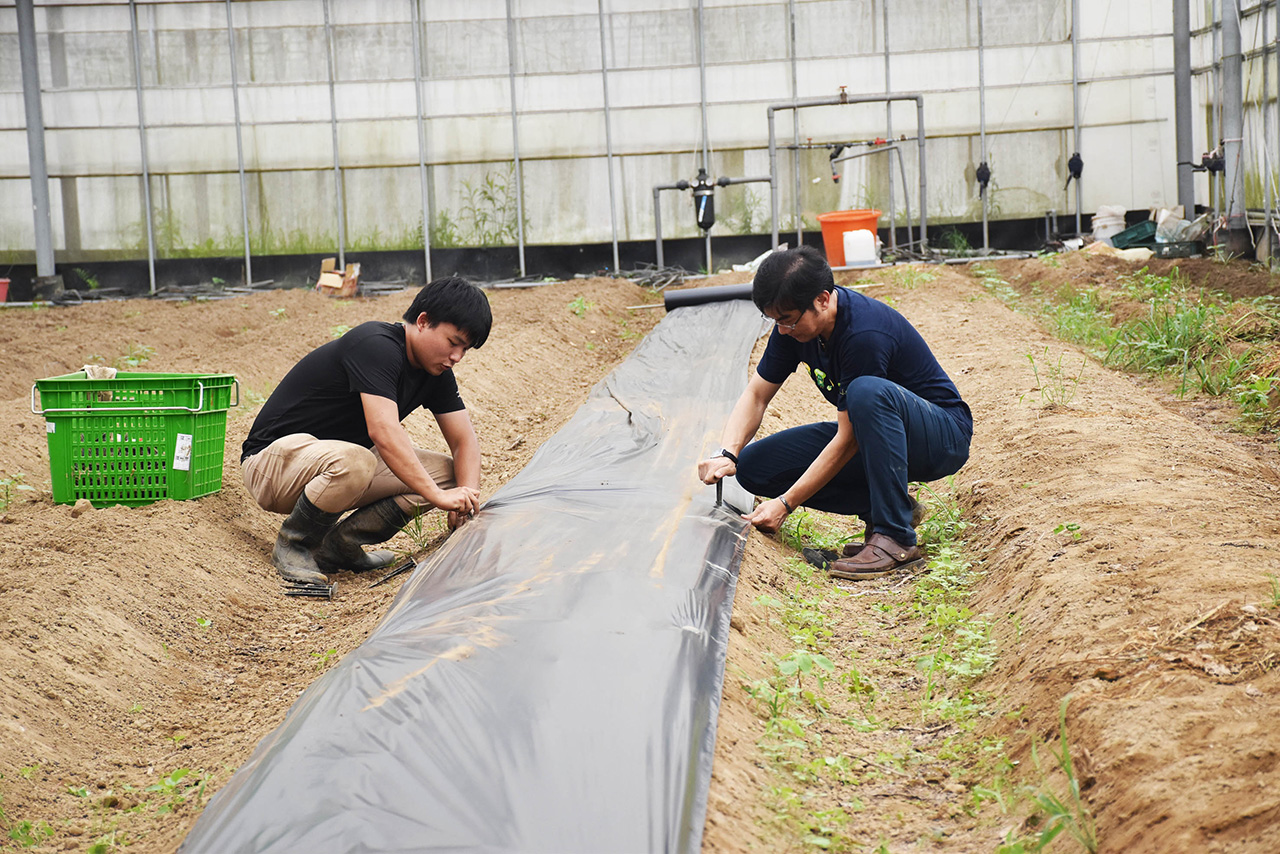
ITRI and NTU researchers lay their innovative mulch film in farmland for field tests.
Seeking a practical alternative, ITRI and National Taiwan University (NTU) jointly developed a biodegradable mulch film capable of decomposing directly in soil under field conditions. Although biodegradable agricultural films already exist, adoption has remained limited because many products cost 1.5 to 2 times more than conventional PE films while still requiring industrial composting facilities or failing to fully decompose under normal field conditions.
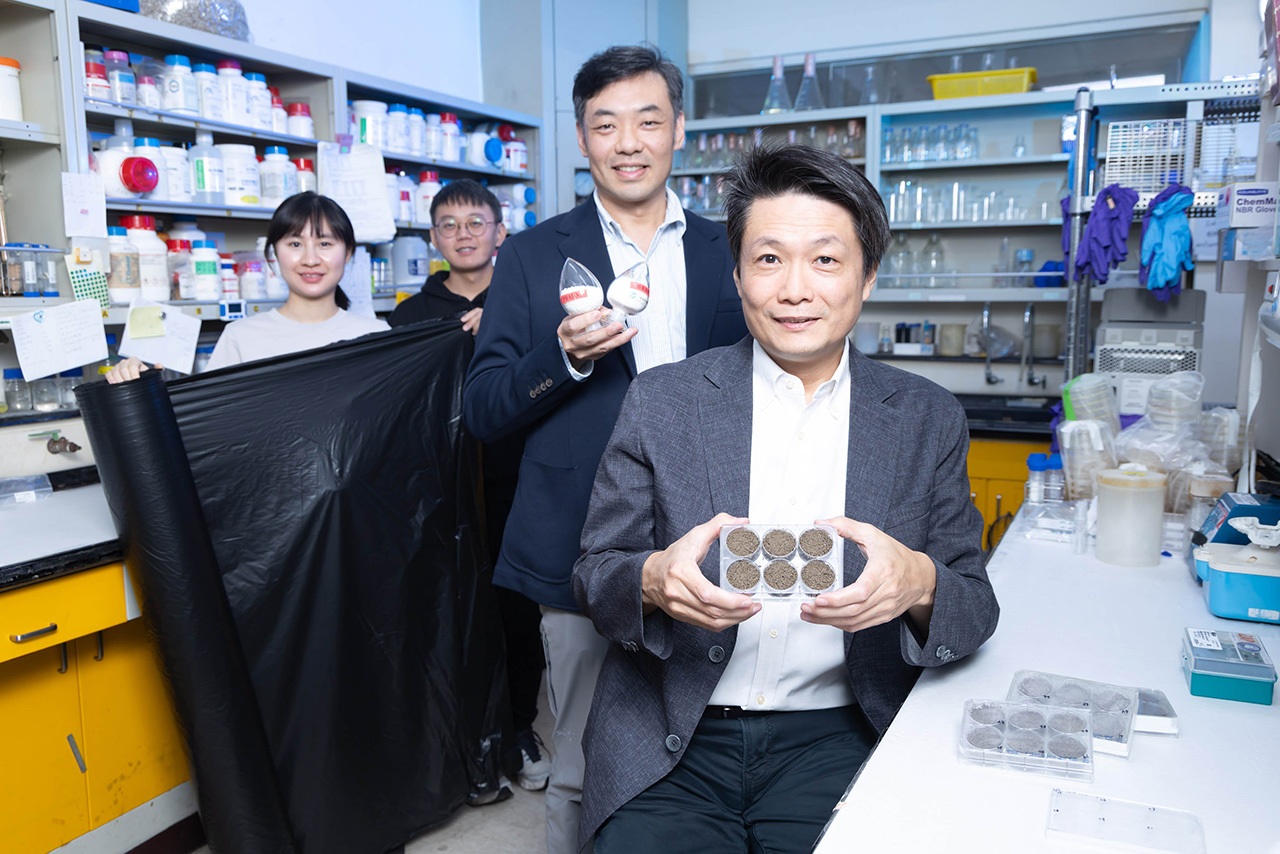
ITRI and NTU researchers developed the biodegradable mulch film through joint materials and microbial research.
Engineering Plastics for Microbial Degradation
For the researchers, the challenge was not simply creating a biodegradable material in the lab, but ensuring it could perform reliably in real farming environments. “A material may look promising in the lab, but if farmers cannot use it easily in the field, it has little real value,” said Eric Chang, Technical Manager at ITRI’s Material and Chemical Research Laboratories.
That practical focus shaped the team’s research approach. Unlike many biodegradable plastics on the market, which require industrial composting facilities operating at around 58°C, the new material can break down directly in ordinary soil environments. The breakthrough came from understanding how microorganisms interact with materials.
Rather than inventing a completely new plastic, the team improved existing biodegradable materials by blending natural derivatives into PBAT, a common biodegradable polyester. The additives act like microbial “starters,” helping attract naturally occurring microorganisms and making the plastic easier for them to digest. Researchers also adjusted how the material interacts with water, allowing long polymer chains to gradually break into smaller fragments that microbes can consume more efficiently. By carefully balancing durability and degradability, the team was able to control decomposition speed to match crop growth cycles.
The approach also differs from many competing biodegradable films, which often use additives such as coffee grounds or rice husks to speed up degradation. “We found that adding agricultural waste materials often weakened the film, making it more likely to tear during installation,” Chang explained.
From Lab Research to Farmland Testing
The newly developed mulch film remains durable throughout cultivation yet decomposes rapidly after use. Tests showed that under normal soil conditions, the material could disintegrate by more than 90% within four months and undergo near-complete biodegradation within 10 months. Compared with burning conventional PE films, the technology can reduce carbon emissions by approximately 40%.
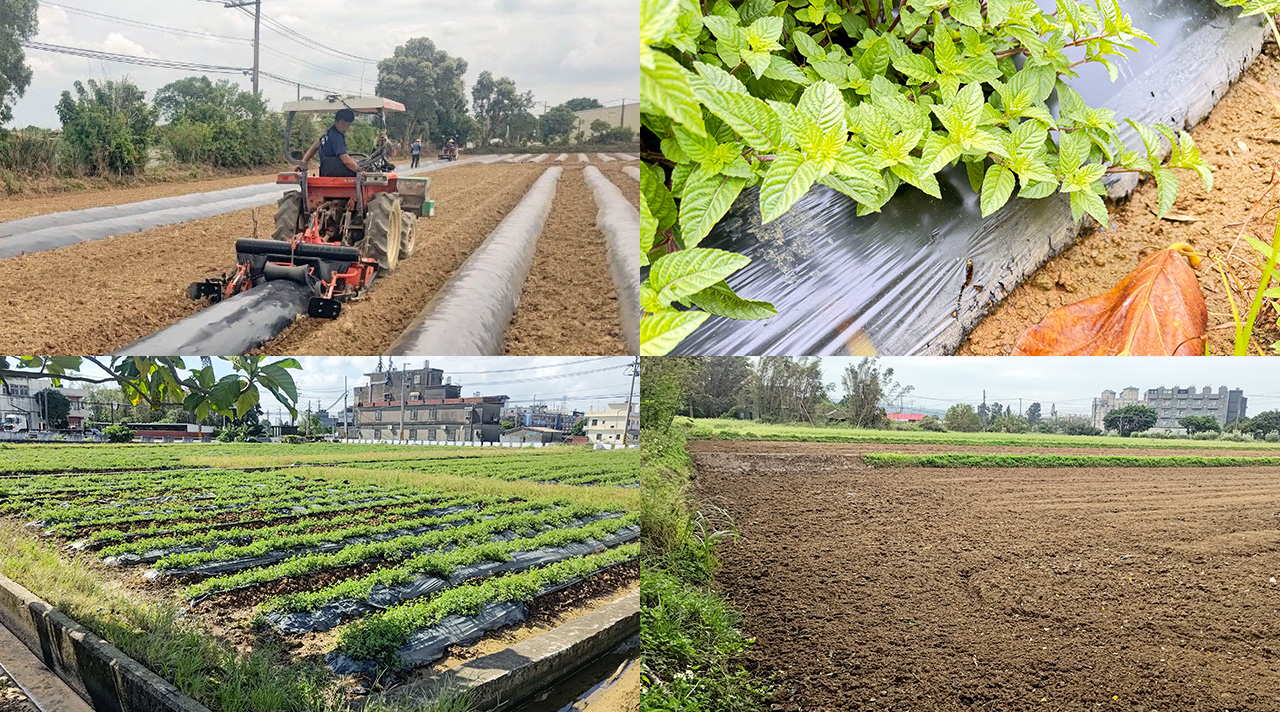
The new mulch film can naturally decompose in soil after cultivation within four months.
Beyond laboratory development, the researchers also needed to confirm that the material could reliably decompose under diverse farming conditions. Professor Chi-Te Liu’s lab from NTU conducted field studies using soil samples collected from farms across Taiwan and developed soil burial simulation systems to evaluate decomposition behavior at ambient temperatures. The team also identified microbial strains capable of accelerating degradation and found that certain soil pH levels and metal ions could further influence decomposition rates.
A Scalable Model for Sustainable Agriculture
Following successful field verification, the biodegradable films are already being introduced in strawberry, tomato, and melon farms, with additional applications under development for fruit-protection bags, mushroom cultivation bags, and other disposable agricultural packaging. To better understand farmers’ needs, Chang visited more than 30 local farmers’ associations across Taiwan. He found that mushroom cultivation bags alone represent annual demand exceeding 400 million units.
More than a materials breakthrough, the project demonstrates how cross-disciplinary collaboration from scientific research to industrial manufacturing can turn sustainability research into real-world solutions. As countries worldwide seek to reduce agricultural plastic waste and carbon emissions, ITRI’s approach may offer a scalable model for the future of sustainable farming materials.