Feature
Bridging the Gaps in Silicon Photonics
As AI models continue to scale and data centers expand, data transmission has become as critical as computation itself. Copper wires, the backbone of digital systems for decades, are increasingly constrained by rising data rates, thermal limitations, and signal integrity challenges. Silicon photonics promises a way forward by shifting data transmission from conventional electrical interconnects to optical signal transmission, offering far greater bandwidth and efficiency, potentially even within chips themselves. The challenge lies in turning that promise into manufacturable, scalable technology—an R&D hurdle that has kept silicon photonics expensive and confined to high-performance applications.
Against this backdrop, ITRI has emerged as a key driver in advancing silicon photonics from concept to system-level implementation. Through sustained R&D efforts spanning device integration, advanced packaging, and ecosystem collaboration, ITRI is addressing the core barriers that have limited broader adoption, demonstrating high-speed optical modules while developing the Silicon Photonics Semiconductor Open Platform to support industry partners across design, manufacturing, and testing.
Challenges on the Path to Scalable Silicon Photonics
Realizing silicon photonics at scale requires close coordination between optical components and advanced semiconductor processes. Materials compatibility, alignment precision, and packaging complexity all contribute to increased cost and engineering risk. Co-packaged optics, widely regarded as an important enabler, remains challenging to implement with sufficient reliability. Together, these factors have slowed large-scale deployment and limited silicon photonics primarily to applications where performance requirements outweigh cost considerations.
A 1.6-Terabit Step Forward at ITRI
ITRI has demonstrated a concrete advance. By combining silicon photonics with advanced packaging technologies, ITRI’s R&D team has developed Taiwan’s first silicon photonics optical engine module capable of supporting data transmission rates of up to 1.6 terabits per second. Its compact design emphasizes material compatibility and high-density optoelectronic integration.
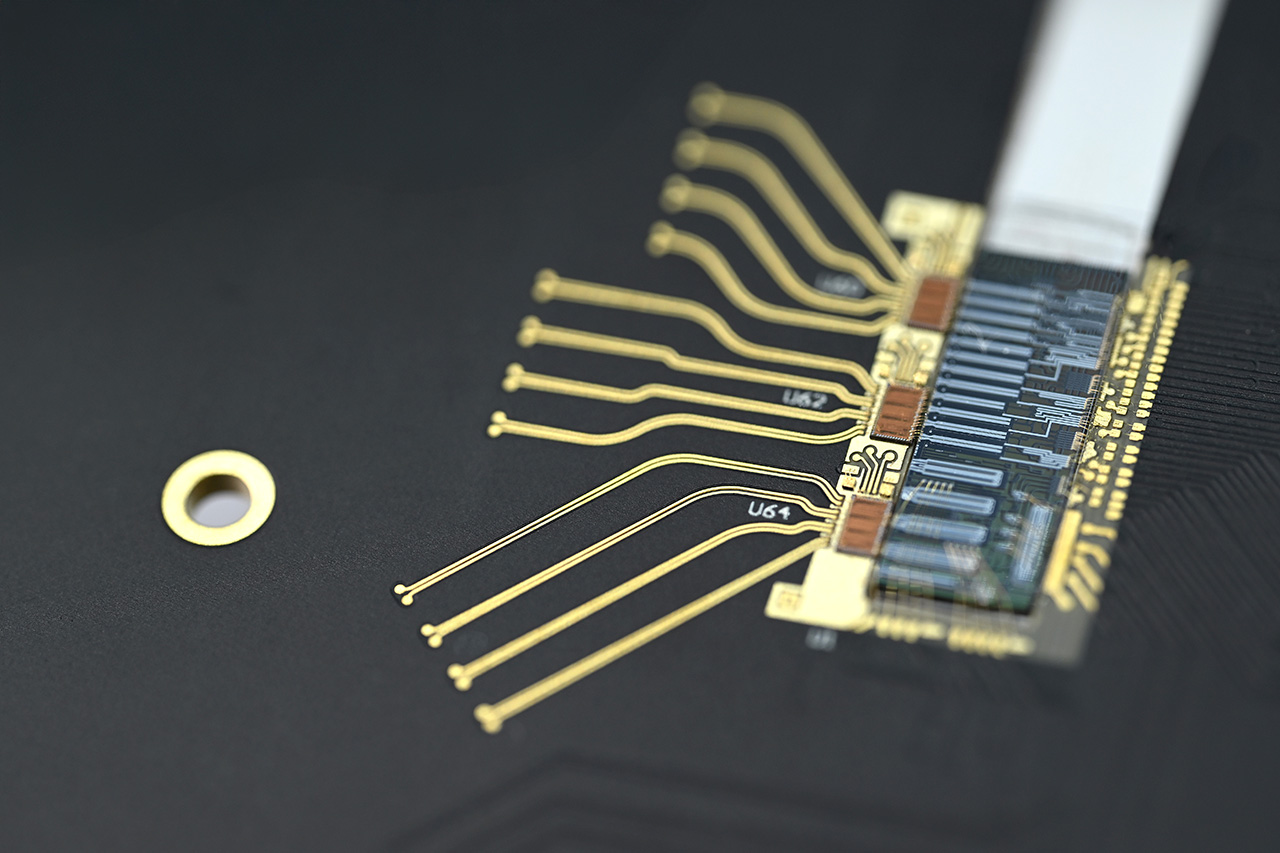
ITRI’s silicon photonics optical engine module supports data transmission rates of up to 1.6 terabits per second.
The result is a meaningful gain in bandwidth and energy efficiency, bringing the module in line with performance levels seen in recent international benchmarks. In practical terms, such a data rate would allow a two-hour 4K video to be transmitted in roughly one second, illustrating the scale of performance silicon photonics can enable when integration challenges are addressed.
Still, optical transmission is not a universal solution—at least not yet.
Why Copper Still Dominates, for Now
“Converting between electrical and optical signals introduces latency and additional system complexity, particularly when laser calibration is involved,” said Shih-Chieh Chang, Vice President and General Director of Electronic and Optoelectronic System Research Laboratories at ITRI. “At the same time, copper-based interconnects have continued to advance faster than many expected. Today, per-channel data rates can reach up to 200 gigabits per second. For shorter connections, copper remains the more practical choice, while silicon photonics is mainly used where high bandwidth over longer distances is required, such as in large-scale data centers.”
This balance, however, may begin to shift as advances in automation and standardization gradually reduce the cost and complexity of silicon photonics, opening the door to broader adoption.
Bringing Optics Closer to the Core
The next stage of development aims to bring optical technologies closer to the core of computing systems. Traditionally, optical signals enter from the back of a server or system rack, traveling across printed circuit boards before reaching the chip. “Future architectures place optical engines and switching chips on the same substrate, allowing optical signals to reach the processing core more directly,” said Chang. “In such designs, a single optical fiber could potentially support transmission rates of 400 gigabits per second or more.”
ITRI’s Open Platform as an Integration Engine
These possibilities have drawn strong interest from across the global semiconductor industry. Leading chipmakers and data infrastructure companies are investing heavily in silicon photonics, while Taiwan’s industrial ecosystem has formed a dedicated alliance to accelerate development. Yet for many traditional optical communication vendors, the transition toward chip-level integration and system-level design presents a steep learning curve.
Since its founding, ITRI has focused on upgrading Taiwan’s industries, acting not only as a technology developer but also as an industry integrator. Through its Silicon Photonics Semiconductor Open Platform, the Institute brings together high-density 2.5D and 3D design, ultra-high-speed multi-lane testing, and heterogeneous integration of photonic and electronic chips. The platform is designed to address key gaps across the silicon photonics value chain, offering a more unified, end-to-end pathway across design, manufacturing, packaging, and testing—shortening the path from laboratory prototypes to deployable systems.
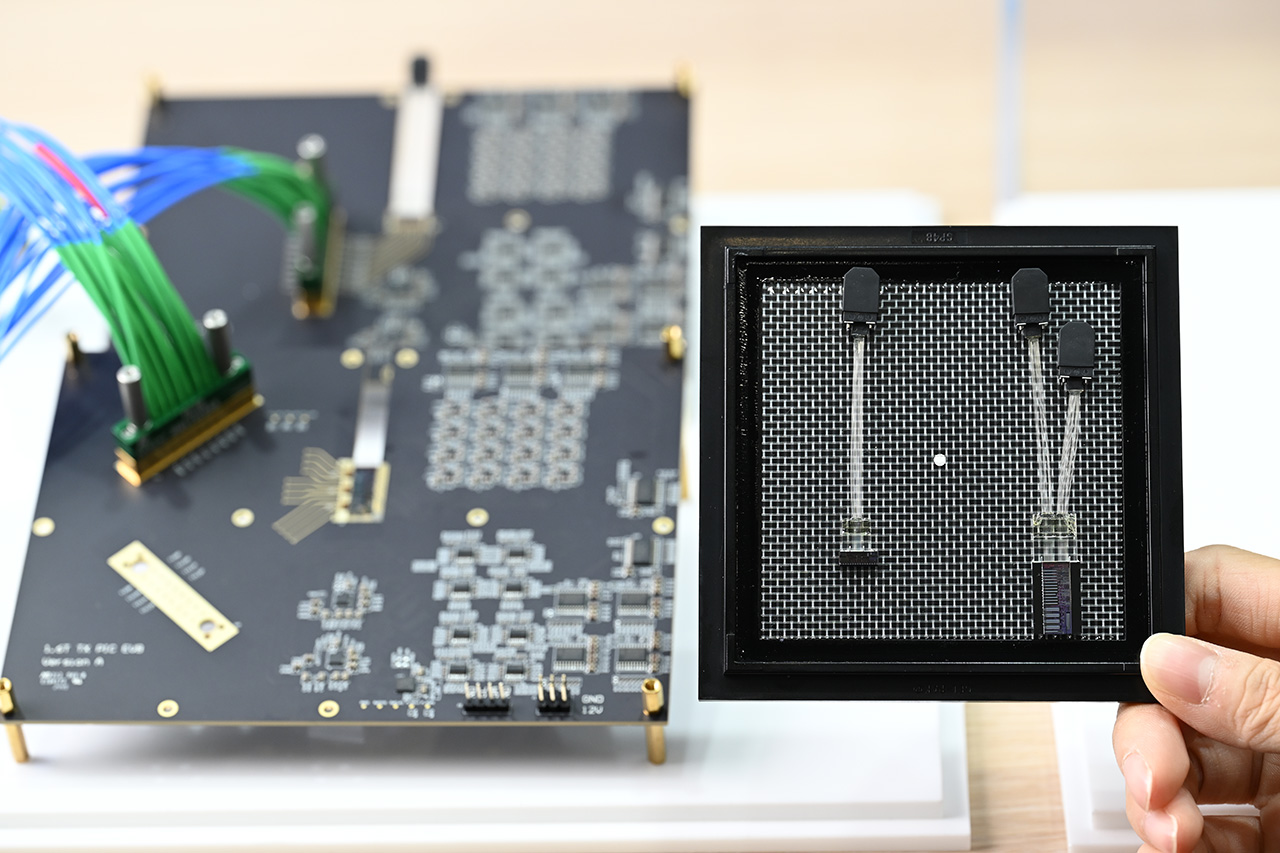
A silicon photonics 1.6T optical engine prototype developed through ITRI’s Silicon Photonics Semiconductor Open Platform.
By connecting partners across the supply chain, Taiwan aims to strengthen its role in the next wave of high-speed computing and data transmission. As data transmission increasingly defines the limits of computing performance, the ability to integrate optical technologies efficiently, economically, and at scale may prove decisive in shaping the future of digital infrastructure.