R&D Focus
A New Way to Remove NOx Without Ammonia
Industrial boilers, combustion systems, and semiconductor waste treatment facilities generate nitrogen oxides (NOx), a major air pollutant that contributes to smog, acid rain, and fine particulate pollution. For decades, manufacturers have relied on selective catalytic reduction (SCR) to remove NOx, but the process requires operating temperatures of 300–400°C and ammonia-based reducing agents, forcing facilities to reheat exhaust gas and increasing energy consumption, carbon emissions, and the risks of ammonia slip and secondary particulate formation.
At ITRI, researchers wondered: Could NOx be removed without ammonia?
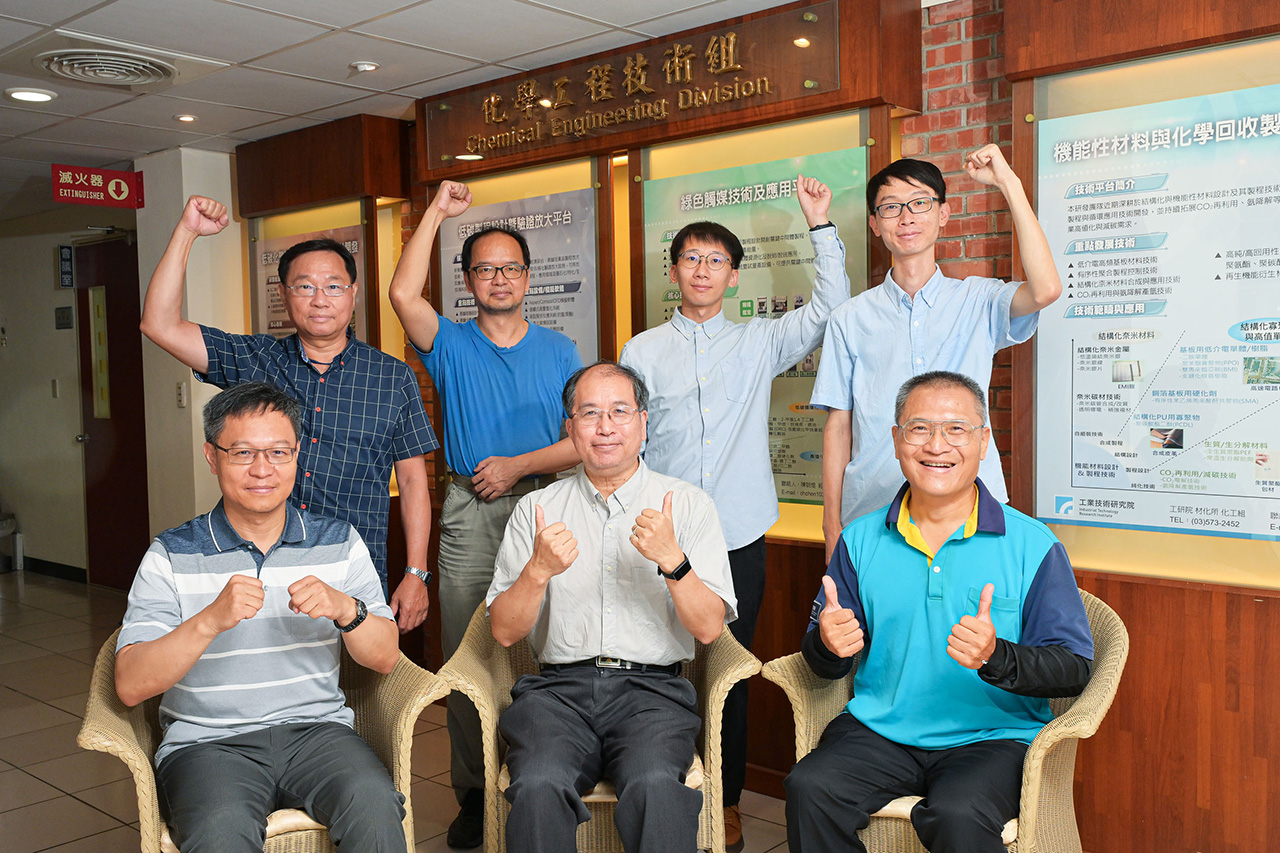
Dr. Kuo-Ching Wu (front center) with his research team
That question sparked the development of Ammonia-Free DeNOx Technology. Led by Dr. Kuo-Ching Wu, Senior Researcher of ITRI’s Material and Chemical Research Laboratories, the team developed a proprietary ternary mixed-oxide catalyst that removes NOx efficiently at much lower temperatures without ammonia, urea, or other chemical additives.
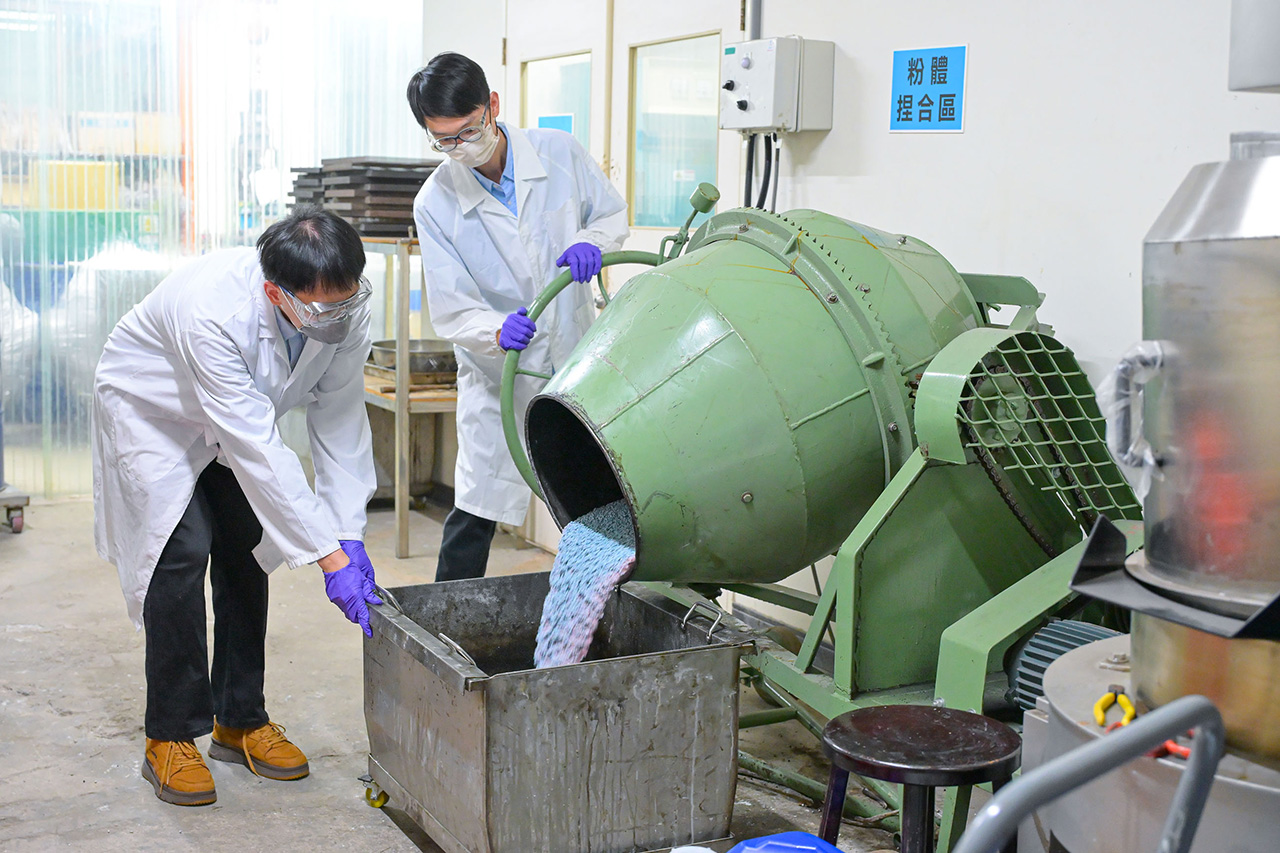
Production process of ITRI’s ternary mixed-oxide catalyst
The catalyst operates across a broad low-temperature range—from room temperature up to about 180°C, allowing manufacturers to utilize the residual heat from exhaust streams rather than reheating flue gas. Eliminating ammonia also simplifies operation while preventing unpleasant odors and secondary pollution.
The technology consistently reduces NOx concentrations to below 5 ppm while maintaining removal efficiencies above 80%. This capability supports compliance with increasingly stringent emission standards. Few commercially available technologies achieve comparable results below 200°C.
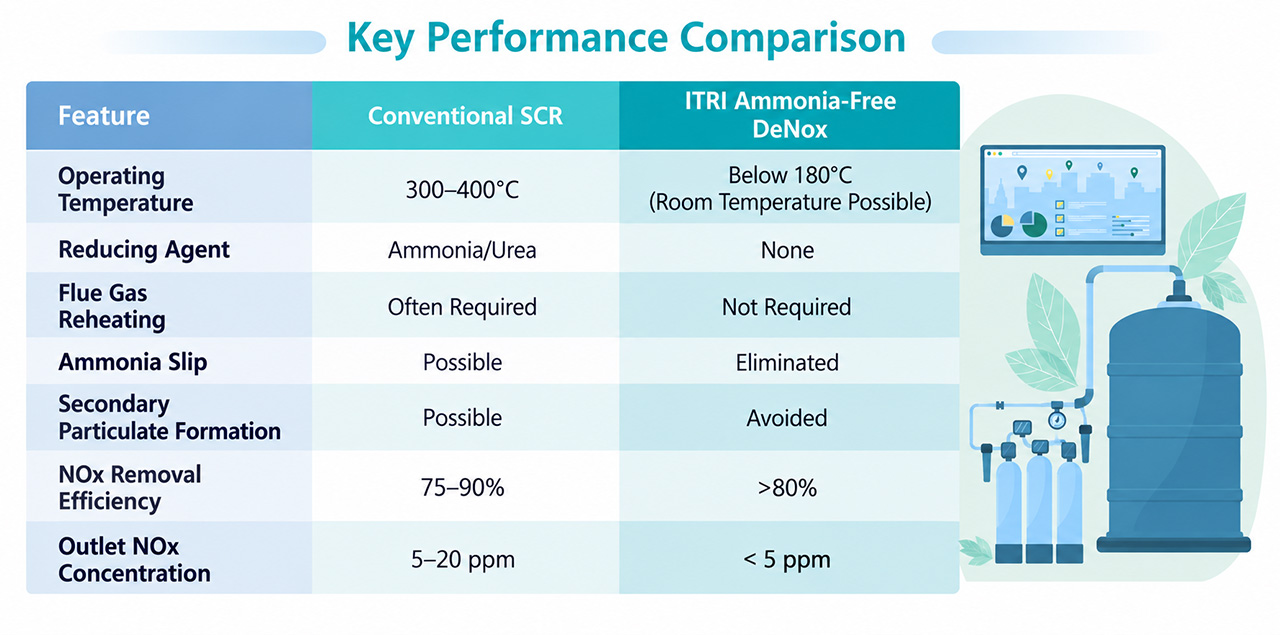
Comparison of conventional SCR and ITRI’s Ammonia-Free DeNox Technology
Real-world operating conditions, however, presented additional challenges not encountered in the laboratory. During field trials, the team found that dust, condensed moisture, and fluorinated organic compounds could impair catalyst performance. Rather than redesigning the catalyst, they developed a dedicated filtration system to protect it from these contaminants. The integrated solution was successfully deployed in 2025 on a coal-fired boiler at a manufacturing facility. ITRI has also secured a patent for the catalyst scrubber design that accelerates its industrial implementation.
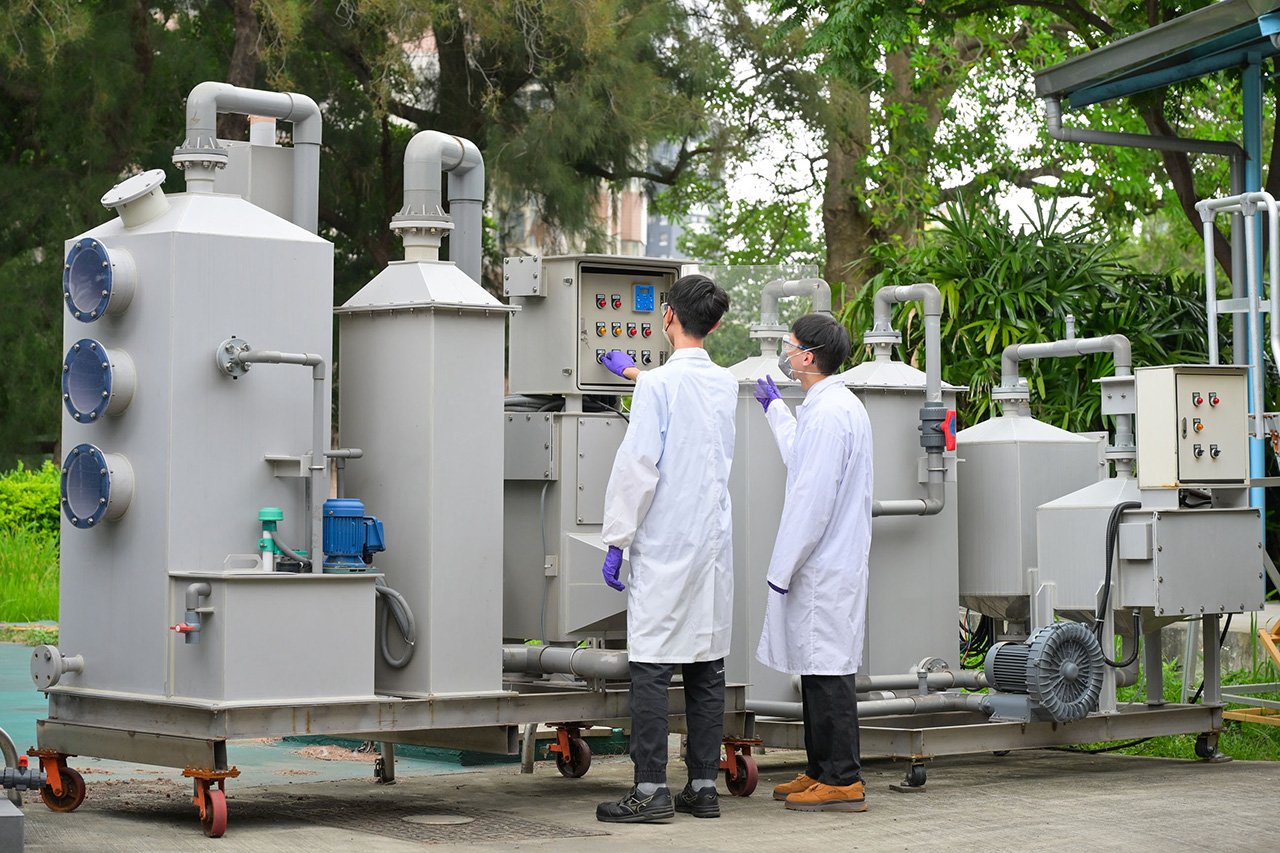
ITRI-designed catalyst scrubber and gas filtration system
Beyond its environmental advantages, the technology offers compelling economic benefits. By eliminating ammonia consumption, reducing fuel use for reheating, and lowering associated carbon emissions, it significantly cuts operating costs. With 4,000 operating hours in one year and a three-year catalyst lifetime, ITRI estimates that the technology can reduce carbon emissions by approximately 200 tons while lowering total costs to about half those of a conventional SCR system, based on a treatment capacity of 2.29 kg of nitric oxide per hour.
ITRI’s ammonia-free catalyst has been patented and is now available for technology transfer. It is poised for applications ranging from traditional industrial boilers to semiconductor waste incinerators. As NOx regulations continue to tighten worldwide, this innovation offers manufacturers a cleaner, more energy-efficient, and cost-effective alternative to conventional SCR.